Modern industrial facilities rely on movement. Forklifts pass through internal routes, goods move continuously between storage and production areas, and teams work close to racking, machinery, structural edges, and loading zones throughout the day. In this kind of environment, safety cannot depend only on warning signs or operator attention. It also depends on whether the site is physically organised in a way that reduces contact risk before damage occurs.
As traffic pressure increases inside warehouses and factories, businesses are giving more attention to protective systems that support daily operations rather than interrupt them. In that context, Raysan Safety Barrier is relevant to facilities looking for industrial protection solutions that help create clearer routes, protect exposed assets, and support more reliable working conditions over time.
Clear vehicle guidance reduces risk in shared internal spaces
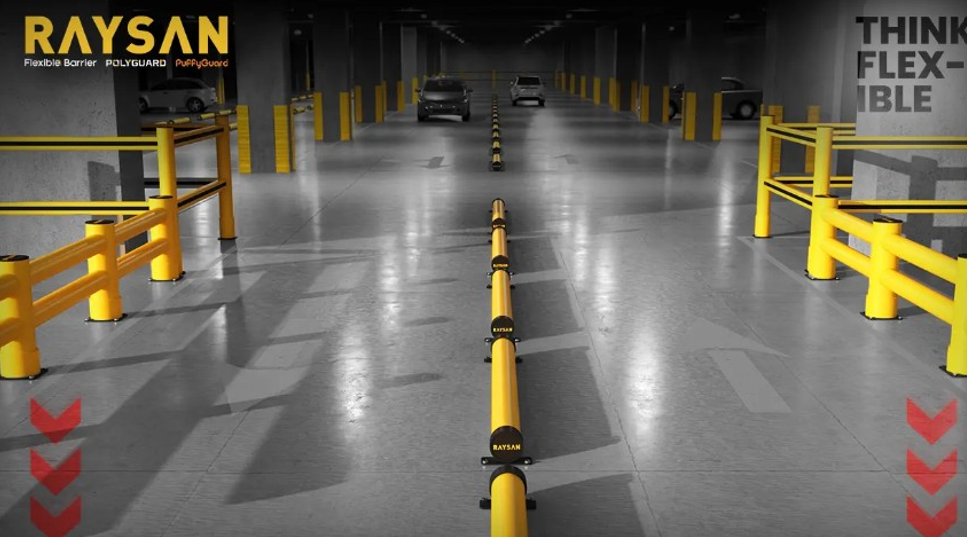
One of the most common causes of impact inside industrial sites is poor route definition. Crossings, turning zones, aisle junctions, and transfer corridors can become repeated pressure points when internal traffic is not separated clearly enough. That is why a traffic barrier plays an important role in creating more controlled vehicle movement inside active facilities. Rather than serving only as a visible divider, it helps shape behaviour by making the intended route physically clearer for operators and surrounding teams.
This kind of support becomes especially valuable in high-traffic environments where repeated low-level contact can gradually lead to damage, maintenance issues, and avoidable disruption. When routes are reinforced more effectively, the site often becomes easier to manage and more predictable under pressure.
Storage systems need stronger protection in fast-moving warehouse conditions
Racking is one of the most exposed elements in any warehouse layout. Forklift manoeuvres often take place in limited space, especially near upright ends and aisle entrances, which increases the likelihood of repeated contact. This is why rack protection remains such an important part of warehouse safety planning. When vulnerable rack sections are protected properly, the impact is less likely to reach the storage structure itself.
That protection supports more than structural defence. It also helps reduce interruptions, lowers the need for avoidable repairs, and preserves the broader storage layout over time. In facilities where speed and continuity matter, these benefits are closely tied to operational efficiency as well as safety.
Better layout protection supports more consistent daily operations
Traffic control and rack defence are often discussed separately, but in practice they work best as part of the same wider safety strategy. When vehicle routes are easier to read and exposed infrastructure is better protected, the whole site becomes more stable and easier to operate.
This can lead to fewer maintenance interventions, less uncertainty around movement zones, and a stronger sense of control across busy industrial areas. Over time, that consistency helps facilities maintain both safety performance and workflow reliability.
See also: Building the Future of Financial Technology Systems
Preventive planning creates stronger industrial environments
The most resilient sites are usually not the ones that react fastest after an incident, but the ones that anticipate pressure points directly in the layout. By combining route guidance with targeted protection around storage systems, businesses can create environments that are safer for people, vehicles, and equipment alike.
In the end, good industrial protection is about more than installing isolated products. It is about building a site structure that supports safer movement, protects valuable infrastructure, and makes daily operations easier to sustain over the long term.